Dua for the First 10 Days of Ramadan – Complete First Ashra Guide
The first ten days of Ramadan are known as the Days of Mercy (Ayyam al-Rahmah). These blessed days invite believers to seek Allah’s compassion, forgiveness, and spiritual elevation. Reciting dua during the early days of Ramadan softens the heart, purifies the soul, and strengthens the connection with Allah (SWT).
In this guide, you’ll find authentic duas, their meanings, benefits, and the best way to recite them during the first ten days of Ramadan.
Virtues of the First 10 Days of Ramadan
The mercy of Allah surrounds the believer in a special way during the beginning of Ramadan. The Prophet ﷺ emphasized that Ramadan is divided into three spiritual phases:
- First 10 days: Mercy (Rahmah)
- Second 10 days: Forgiveness (Maghfirah)
- Last 10 days: Freedom from Hellfire (Nijat)
The opening phase focuses on welcoming Ramadan with humility, repentance, and heartfelt duas. Muslims strive to soften their hearts and earn Allah’s special compassion.
Most Recommended Dua for the First 10 Days of Ramadan
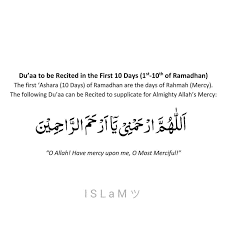
The most well-known dua for these days is:
اللَّهُمَّ ارْحَمْنِي يَا أَرْحَمَ الرَّاحِمِينَ
Allahumma irhamni ya Arhamar Rahimeen.
Meaning:
“O Allah, have mercy on me, O Most Merciful of those who show mercy.”
This short yet powerful dua aligns perfectly with the theme of mercy in the first part of Ramadan.
Powerful Duas for Mercy During the First Ten Days
Below are additional duas that strengthen a believer’s spiritual journey during the early days of Ramadan.
Dua for Allah’s Compassion
اللهم إني أسألك رحمةً من عندك تهدي بها قلبي
Allahumma inni as’aluka rahmatan min ‘indika tahdi biha qalbi.
Meaning:
“O Allah, I ask You for mercy from You which will guide my heart.”
Dua for Protection and Blessings
رَبِّ اغْفِرْ وَارْحَمْ وَأَنْتَ خَيْرُ الرَّاحِمِينَ
Rabbi ighfir warham wa anta khayrur rahimeen.
Meaning:
“My Lord, forgive and have mercy, for You are the best of those who show mercy.”
Dua for Light, Guidance, and Inner Peace
اللهم اجعل في قلبي نورًا
Allahumma ij‘al fi qalbi nooran.
Meaning:
“O Allah, place light within my heart.”
This dua helps the believer develop spiritual clarity during Ramadan.
Dua for Starting Ramadan with Purity
اللهم طهر قلبي من النفاق وعملي من الرياء ولساني من الكذب
Allahumma tahhir qalbi minan nifaq wa ‘amali minar riya’ wa lisani minal kadhib.
Meaning:
“O Allah, purify my heart from hypocrisy, my actions from showing off, and my tongue from falsehood.”
Dua for Each of the First Ten Days of Ramadan (Day-by-Day Collection)
To help Muslims stay consistent, here is a set of recommended duas you can recite daily in the first ashra.
Day 1 – Dua for Mercy
Allahumma irhamni ya Arhamar Rahimeen.
Day 2 – Dua for Guidance
Allahumma ihdini siratak al-mustaqeem.
Day 3 – Dua for Spiritual Strength
Allahumma inni a‘udhu bika min ghalabatid-dayn wa qahrir-rijaal.
Day 4 – Dua for Purity of Heart
Allahumma tahhir qalbi wa hassin akhlaqi.
Day 5 – Dua for Peace and Tranquility
Allahumma anzil ‘alayya sakinah.
Day 6 – Dua for Increased Iman
Rabbi zidni imana wa yaqeenan.
Day 7 – Dua for Blessings in Ramadan
Allahumma barik li fi ramadan.
Day 8 – Dua for Protection
Allahumma qini ‘adhabaka yawma tab’athu ‘ibadak.
Day 9 – Dua for Mercy and Light
Allahumma ij‘alni min ahl noor wa rahmah.
Day 10 – Dua for Acceptance of Deeds
Rabbana taqabbal minna innaka antas-Samee‘ul-‘Aleem.
Meaning and Spiritual Benefits of Reciting These Duas
Each dua carries a unique spiritual benefit. Combined together, they help strengthen faith, cleanse the soul, and prepare the believer for the deeper worship of the remaining Ramadan days.
Brings You Closer to Allah
Dua is a direct conversation with Allah. The Prophet ﷺ said, “Dua is the essence of worship.” These days are meant to connect your heart with Allah.
Purifies the Heart
Many duas focus on mercy, forgiveness, and peace—cleansing the heart from spiritual burdens.
Sets the Right Intentions
The opening days of Ramadan set the tone. These duas help you enter the month with sincerity.
Attracts Allah’s Rahmah
As these are the “Days of Mercy,” the more one asks for Allah’s compassion, the more one receives.
You can also deepen your connection with Allah during Ramadan by learning how to reflect on the Quran, which enhances the impact of your duas and worship.
How to Recite Dua in the First 10 Days of Ramadan
Here are recommended ways to make dua more meaningful and accepted:
1. Start with Praise and Sending Salawat
Begin by praising Allah and sending blessings on the Prophet ﷺ.
2. Raise Your Hands with Humility
Approach dua with sincerity, humility, and a soft heart.
3. Ask for Both Dunya and Akhirah
Ramadan duas should balance worldly needs with spiritual goals.
4. Cry, Reflect, and Speak From the Heart
Ramadan is a time when hearts soften easily. Pour your heart into your dua.
5. Recite Duas After Every Salah
The early days of Ramadan are ideal for building habits.
6. Make Dua Before Iftar
This is a moment when duas are accepted.
Additional Sunnah Duas Recommended During the First Ashra
Here are more prophetic duas that complement the first ten days:
Dua for Forgiveness
Allahumma inni zalamtu nafsi zulman kathiran…
Meaning: “O Allah, I have wronged myself greatly…”
Dua for Guidance and Piety
Allahumma inni as’aluka al-huda wat-tuqa wal-‘afafa wal-ghina.
Dua for Protection From Evil
Allahumma inni a‘udhu bika minal hammi wal-hazan.
For extra protection and spiritual strength during Ramadan, you may also find it helpful to read our guide on dua for evil eye.
Common Questions About the First 10 Days of Ramadan Duas
What is the main dua for the first ashra?
The most commonly recited dua is: Allahumma irhamni ya Arhamar Rahimeen.
Can I recite other duas besides this one?
Yes. Any dua that seeks Allah’s mercy and closeness is recommended.
Do I need to recite a different dua each day?
No. It is optional. Consistency is more important than quantity.
Is it okay to recite duas in English?
Yes. Allah understands all languages.
Are these duas authentic?
All duas included have Islamic foundations; some are Qur’anic, others prophetic or general duas for mercy.
Conclusion
The first ten days of Ramadan are a priceless opportunity to welcome mercy, soften your heart, and establish a deeper connection with Allah. The duas shared here are simple, powerful, and deeply meaningful—perfect for Muslims seeking spiritual growth in the holiest month of the year.
Recite them with sincerity, reflect on their meanings, and let the mercy of Allah fill your heart in these blessed days.