Dua for Starting Fast in Ramadan – Complete Guide
Ramadan is a month of spiritual reflection, increased devotion, and disciplined fasting. Every act in this blessed month carries immense reward, and starting your fast with the right intention (niyyah) and dua is a fundamental part of maximizing the spiritual benefits.
Reciting the dua for starting fast in Ramadan is more than a ritual; it aligns your heart, mind, and actions with the purpose of worshipping Allah. In this guide, we will explore authentic duas, their meaning, benefits, proper etiquette, and answers to common questions, ensuring you start every fast in Ramadan with sincerity and mindfulness.
Understanding the Importance of Intention (Niyyah) in Fasting
In Islam, fasting is not only abstaining from food and drink but also a spiritual act of devotion. The intention (niyyah) is what transforms a physical action into a spiritually meaningful act. The Prophet Muhammad ﷺ said:
“Actions are judged by intentions, and every person will get the reward according to what they intended.” (Sahih Bukhari, Hadith 1)
Why Niyyah Matters:
- It differentiates between mere abstinence and a true act of worship.
- A proper intention ensures that your fast is accepted by Allah.
- It prepares your heart and mind to focus on spiritual growth rather than just physical endurance.
Key Takeaways:
- Your intention can be verbal or in your heart.
- Reciting a specific dua enhances mindfulness and devotion.
- Understanding the meaning of the dua makes your fasting more spiritually rewarding.
Authentic Duas for Starting Fast in Ramadan
Classical Dua for Starting Fast
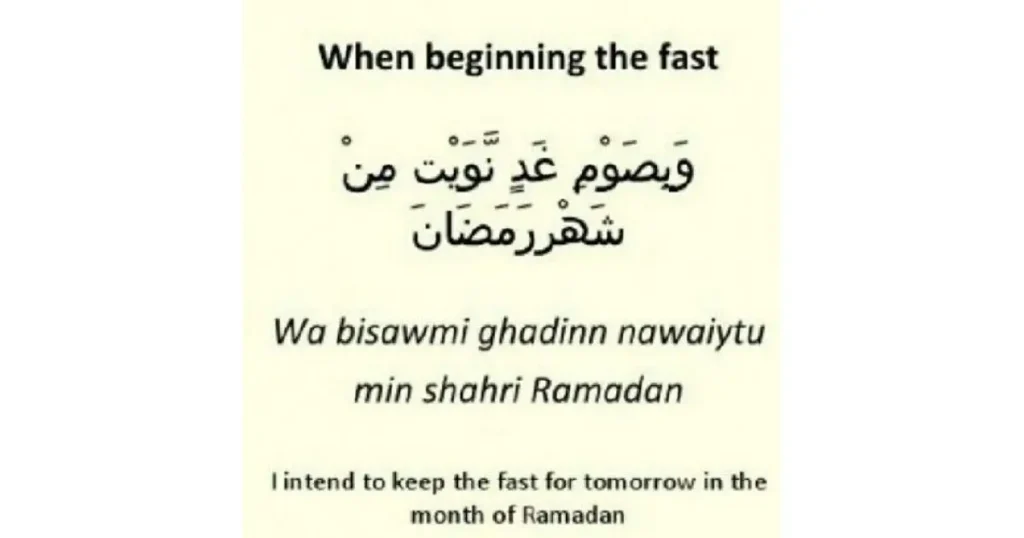
One of the most widely accepted duas to begin your fast is:
Arabic:
وَبِصَوْمِ غَدٍ نَوَيْتُ مِنْ شَهْرِ رَمَضَانَ
Transliteration:
Wa bisawmi ghadin nawaitu min shahri Ramadan
English Meaning:
“I intend to keep the fast for tomorrow in the month of Ramadan.”
This simple yet profound dua should be recited at suhoor (pre-dawn meal) or just before the fast begins. It establishes your intention and sets the tone for a day of devotion.
Dua for Moon Sighting at Ramadan Start
Since the beginning of Ramadan is based on the sighting of the crescent moon, there is a recommended dua when witnessing the new moon:
Arabic:
اللَّهُمَّ أَهِلَّهُ عَلَيْنَا بِالْيُمْنِ وَالإِيمَانِ وَالسَّلَامَةِ وَالإِسْلَامِ
Transliteration:
Allahumma ahillahu ‘alayna bil-yumni wal-imani was-salamati wal-islam
English Meaning:
“O Allah, let this moon appear on us with blessings, faith, peace, and Islam.”
Reciting this dua connects your intention with the spiritual commencement of Ramadan and aligns you with the communal observance of fasting.
Alternative or Short Duas
For beginners, children, or those who prefer a simpler version:
Arabic:
اللَّهُمَّ إِنِّي أَوْدُو صَوْمِي لِوَجْهِكَ الْكَرِيمِ
Transliteration:
Allahumma inni audhu saumi liwajhikal kareem
English Meaning:
“O Allah, I fast for Your noble sake.”
This short and easy dua is effective for instilling the habit of mindful intention in young learners or anyone new to fasting.
“For more guidance on beginning your fast, check out our detailed guide on the Dua for Opening Fast in Ramadan.
Step-by-Step Guide on How to Recite the Dua
Proper recitation ensures that the intention is sincere and effective. Follow these steps:
- Choose the Right Time: Recite your dua at suhoor (pre-dawn meal) or just before the Fajr prayer.
- Focus Your Mind: Be free from distractions; concentrate on Allah and the purpose of your fast.
- Recite Slowly and With Meaning: Understand each word in Arabic or recite in your language if needed.
- Make Personal Supplications: Alongside the prescribed dua, ask Allah for strength, patience, and acceptance of your fast.
- Maintain Sincerity: Remember that intention in the heart is more important than verbal articulation.
Benefits and Virtues of Reciting Dua for Starting Fast
Reciting the dua has numerous spiritual, emotional, and physical benefits:
- Spiritual Connection: Aligns your heart and mind with Allah before beginning the fast.
- Enhanced Reward: A fast with sincere intention brings multiplied rewards in Ramadan.
- Mindfulness and Discipline: Helps you approach fasting consciously rather than habitually.
- Inner Peace and Gratitude: Strengthens patience, empathy, and appreciation for daily blessings.
- Protection from Negligence: Helps avoid improper or casual observance of the fast.
Hadith Support:
The Prophet ﷺ encouraged sincere intentions and mindfulness in fasting, emphasizing that a well-intended fast is accepted and rewarded abundantly.
Common Mistakes to Avoid When Starting a Fast
- Skipping the Intention: Not making niyyah invalidates the spiritual purpose.
- Reciting Without Understanding: Saying words without knowing the meaning reduces sincerity.
- Starting Fast Without Suhoor: While not obligatory, suhoor is Sunnah and provides physical and spiritual strength.
- Rushing or Distracted Recitation: Focus is essential to maximize the dua’s spiritual impact.
Teaching Children and Beginners to Recite the Dua
- Use Transliteration and Repetition: Helps non-Arabic speakers memorize.
- Start Simple: Use short, meaningful duas for young children.
- Explain the Meaning: Helps them understand the purpose of fasting and intention.
- Make it a Habit: Encourage daily practice to instill lifelong devotion.
Help your children strengthen their Islamic knowledge with our engaging Islamic studies for kids program.
FAQs
Q1: Do I need to say a verbal niyyah?
A1: Verbal is optional; intention in the heart is sufficient.
Q2: Can I recite the dua in my own language?
A2: Yes, understanding the meaning is most important for sincerity.
Q3: What if I forget to make the intention before Fajr?
A3: Recite it as soon as you remember; your fast is still valid.
Q4: Are there different duas for fasting on different days?
A4: The core intention remains the same; additional personal supplications can be made.
Conclusion
Starting your fast in Ramadan with a clear intention and authentic dua elevates the act from a mere physical abstinence to a spiritually meaningful practice. By reciting the dua with understanding, focus, and sincerity, you align your fast with Allah’s guidance, gain greater rewards, and cultivate mindfulness, patience, and gratitude.
For the best experience:
- Memorize the dua in Arabic, transliteration, and meaning.
- Recite it daily at suhoor or before Fajr.
- Encourage family members, especially children, to practice alongside you.
By making your intention a conscious, heartfelt act, every fast becomes a source of spiritual growth and divine blessing.