Names of Angels in Islam Religion: Roles, Significance, and Guidance for Believers
Belief in angels (malaika) is one of the six fundamental articles of faith in Islam. Angels are spiritual beings created by Allah from light (nūr), free from sin, and entirely obedient to the commands of their Creator. They exist in the unseen realm (al-ghayb) and serve multiple divine roles, including delivering revelation, recording human deeds, guiding and protecting believers, and executing the divine will in both the spiritual and natural worlds.
Understanding the names and duties of angels not only strengthens a Muslim’s faith (iman) but also cultivates mindfulness of Allah’s omnipresence and the accountability of our actions.
Understanding Angels in Islam
What Are Angels?
Angels are unique creations of Allah, unlike humans and jinn. They do not eat, drink, marry, or engage in worldly desires. The Qur’an describes them as beings who glorify Allah continuously:
“The angels exalt [Allah] with praise of their Lord…” (Surah An-Naba 78:38)
Their existence emphasizes the unseen aspect of faith, reminding believers that life is governed by divine order and that unseen forces, acting under Allah’s command, are constantly influencing the world.
Importance of Belief in Angels
Belief in angels is an essential part of Aqeedah, forming one of the six pillars of faith in Islam. Allah says in the Qur’an:
“Whoever disbelieves in Allah, His angels, His books, His messengers, and the Last Day has certainly gone far astray.” (Surah An-Nisa 4:136)
Recognizing the existence and roles of angels reinforces a Muslim’s awareness of moral responsibility, accountability, and the eternal nature of divine law.
Misconceptions About Angels
It is a common misconception that angels are human-like or material beings. In reality, they exist in a spiritual realm, invisible to the human eye unless Allah permits their appearance. Angels cannot sin or disobey Allah; their nature is pure and entirely devoted to worship and obedience.

Major Angels in Islam: Names and Duties
Jibril (Gabriel) – The Messenger of Revelation
Jibril (Gabriel) is perhaps the most well-known angel in Islam. He serves as the messenger of Allah, delivering revelation to prophets and conveying divine guidance. Jibril’s role is highlighted in numerous Quranic events, including the revelation of the Qur’an to Prophet Muhammad ﷺ.
He also assisted in the transmission of earlier scriptures to prophets like Musa (Moses) and Isa (Jesus). His presence reminds believers of Allah’s guidance and the importance of following divine instruction.
Mikail (Michael) – The Provider
Mikail (Michael) is entrusted with providing sustenance and managing natural phenomena such as rain, vegetation, and weather. He ensures the provision of life for all creatures, acting as a reminder of Allah’s mercy and the interconnectedness of creation.
By understanding Mikail’s role, Muslims are encouraged to appreciate divine blessings and express gratitude in daily life.
Israfil – The Trumpet Blower
Israfil is responsible for blowing the trumpet on the Day of Judgment (Qiyamah), signaling the resurrection of all beings. The Qur’an alludes to the events of the Last Day, emphasizing the role of angels in the cosmic order and the final accountability of humanity. Israfil’s duty illustrates the magnitude of divine orchestration and the ultimate return to Allah.
Malak al-Mawt – The Angel of Death
Malak al-Mawt, the Angel of Death, is responsible for taking souls at the appointed time. The Qur’an states:
“Every soul will taste death. And We test you with evil and with good as trial; and to Us you will be returned.” (Surah Al-Anbiya 21:35)
The presence of this angel serves as a reminder of the transient nature of life and encourages believers to live righteously in preparation for the hereafter.
Munkar and Nakir – The Grave Questioners
Munkar and Nakir are tasked with questioning the deceased in their graves about their faith and deeds. This process ensures accountability even after death, reinforcing the principle that ethical and spiritual responsibility extends beyond worldly life.
Kiraman Katibin – The Recording Angels
Every individual is assigned two angels, the Kiraman Katibin, who record every good and bad deed. The Qur’an states:
“And indeed, over you are appointed angels…writing down (your deeds).” (Surah Al-Infitar 82:10-12)
This divine record-keeping fosters mindfulness, encouraging believers to perform righteous actions and avoid wrongdoing, knowing that nothing escapes Allah’s awareness.
Guardian Angels
Angels are also assigned to protect and guide believers throughout their lives. These guardian angels offer spiritual protection, shielding Muslims from harm while encouraging moral and ethical conduct.
Lesser-Known Angels and Their Roles
Angels of Natural Phenomena
Beyond the major angels, Islam teaches about angels assigned to manage elements of the natural world. Some angels oversee rain, vegetation, wind, and mountains, maintaining the divine balance of creation.
Angels of Mercy and Forgiveness
Certain angels specialize in interceding for believers, recording good deeds, and conveying Allah’s mercy. Their presence reassures Muslims that Allah’s compassion surrounds them in every aspect of life.
Angels of Punishment and Justice
Other angels are tasked with enforcing divine justice, observing sinful actions, and ensuring the moral order is upheld. They serve as a reminder that unethical behavior is accountable to Allah.
Quranic and Hadith References on Angels
Key Verses About Angels
The Qur’an frequently mentions angels, emphasizing their obedience and significance:
- Surah Al-Baqarah 2:98: Angels follow Allah’s commands without question.
- Surah Fatir 35:1: Angels glorify Allah and carry out His decrees.
- Surah An-Nahl 16:50: Angels are created from light and serve Allah faithfully.
Authentic Hadiths on Angels
- Prophet Muhammad ﷺ said: “When you go to sleep, an angel is appointed over you to record your deeds.” (Sahih al-Bukhari)
- Another hadith states that angels pray for the believer who helps others or engages in righteous acts.
These references highlight the centrality of angels in Islamic belief and daily practice.
You can strengthen your understanding of Islam by exploring the foundational practices through The 5 Pillars of Islam, a comprehensive guide that explains each pillar and its significance in daily life.
How Belief in Angels Impacts a Muslim’s Life
Spiritual Significance
Belief in angels cultivates mindfulness of Allah’s presence, enhancing spiritual consciousness. Recognizing that angels record deeds and observe actions motivates believers to act righteously and uphold moral integrity.
Moral and Ethical Influence
The awareness of recording angels encourages ethical behavior, honesty, and accountability. This divine oversight strengthens a Muslim’s character and guides decision-making in daily life.
Daily Life and Worship
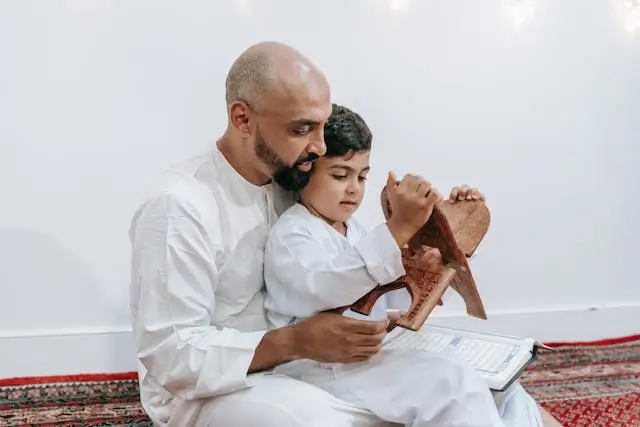
Belief in angels can inspire acts of worship, prayer, and remembrance (dhikr). Teaching children about angels through Islamic education instills foundational faith values from a young age. For structured guidance, parents can explore resources like Islamic Studies for Kids to nurture spiritual growth.
FAQs About Angels in Islam
Are angels visible to humans?
Generally, angels are invisible; however, Allah can permit them to appear in specific situations.
How many angels exist?
The exact number is unknown; the Qur’an and Hadith mention countless angels performing diverse roles.
Can angels sin?
No, angels are sinless by nature and entirely obedient to Allah.
Do angels interact with humans today?
Yes, through guidance, protection, and recording deeds.
What is the difference between angels and jinn?
Angels are sinless beings of light with no free will, while jinn have free will and can be good or evil.
Conclusion – Honoring and Understanding Angels in Islam
The knowledge of angels, their names, and their duties deepens a Muslim’s connection to Allah and enhances spiritual mindfulness. From Jibril delivering revelation to Kiraman Katibin recording deeds, angels remind believers of divine order, accountability, and mercy. Understanding their significance encourages a life of obedience, piety, and consciousness of the unseen. By studying angels and their roles, Muslims strengthen both faith and ethical conduct.
For more structured learning on Islamic knowledge, explore Quran Teacher Online courses that provide guidance for all ages and levels.