Preparing for Umrah Through the Wisdom of Quran Tafseer
o prepare for Umrah through Quran tafseer, study the meanings behind the verses that describe your journey before you travel: Surah Al-Baqarah 2:196 on completing the pilgrimage sincerely for Allah, 2:197 on taqwa as the best provision, 2:125 on the Kaaba as a place of return, 2:158 on Safa and Marwah, and 2:186 on the nearness of Allah to those who call on Him. Reading a trusted tafseer such as Ibn Kathir or As-Sa’di for even fifteen minutes a day in the month before travel turns each ritual from a set of movements into an act you understand and feel.
Most Umrah preparation focuses on the practical side—visas, hotels, what to pack, which du’a to say at which point. All of that matters. But the pilgrims who describe their Umrah as life-changing almost always share something else: they arrived knowing what the rituals mean. That knowledge comes from tafseer, the scholarly explanation of the Quran, and building it takes only a few weeks of quiet reading before you fly.
What is tafseer, and why study it before Umrah?
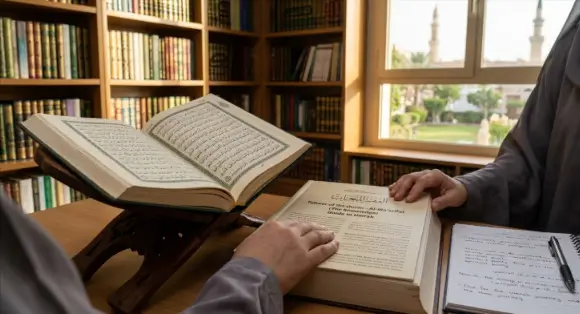
Tafseer is the science of explaining the Quran—the context in which verses were revealed, what the words meant to their first listeners, and how scholars have understood them since. Classical works such as the tafseer of Ibn Kathir, Al-Tabari, and Al-Qurtubi, and accessible modern ones such as As-Sa’di, take you behind the translation into the depth of each verse.
Why does this matter for Umrah? Because every ritual you will perform is rooted in verses of the Quran and in the story of the Prophet Ibrahim and his family. Without that background, Tawaf is seven circuits and Sa’i is seven laps. With it, you walk inside a story that stretches back thousands of years, and every step has a reason. Understanding does not replace worship; it deepens it.
“Complete the Hajj and Umrah for Allah” (Al-Baqarah 2:196)
This is the verse that commands the pilgrimage itself. The scholars of tafseer draw out one word above all: for Allah. Ibn Kathir explains that the verse demands completion with sincerity, free of showing off, trade-first intentions, or half-heartedness.
Before you book anything, this verse asks you a question:
Why am I going?
A pilgrimage made for photographs or status is hollow at its core. One made purely for Allah is accepted even if it is simple and short. It is worth sitting with that question honestly before comparing Hajj packages or Umrah deals, because the intention you pack first shapes everything else.
“The best provision is taqwa” (Al-Baqarah 2:197)
In the same passage, Allah instructs the pilgrims to take provisions for the journey, then immediately turns the meaning inward: the best provision is taqwa, consciousness of Allah.
The tafseer scholars note the beauty of the sequence. Yes, pack your bags, plan your route, carry what you need; the Quran is not against practical preparation. But the luggage that decides the value of your trip is the state of your heart.
A pilgrim with taqwa and a small suitcase has packed better than a pilgrim with five stars and an empty heart.
This verse is the whole philosophy of Umrah preparation in one line.
The Kaaba: “a place of return and security” (Al-Baqarah 2:125)
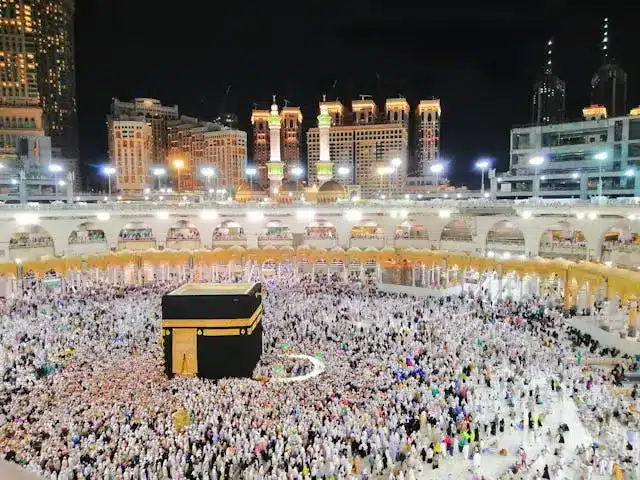
Allah describes the Kaaba as a place people return to, again and again, and a place of safety. The commentators observe something every pilgrim later confirms: no one visits the Kaaba once and feels finished. The heart keeps turning back to it.
The verse also recalls that Ibrahim and Ismail raised its foundations while praying that their work be accepted. When you stand in Tawaf, you are circling a house built by a father and son as an act of obedience, in a barren valley where Ibrahim left his family with nothing but trust in Allah, as Surah Ibrahim 14:37 movingly records.
Zamzam, flowing beside you, is the answer to that trust.
“Safa and Marwah are among the signs of Allah” (Al-Baqarah 2:158)
This verse settles the status of Sa’i: the two hills are declared symbols of Allah, and walking between them is part of the worship He accepts.
The tafseer explains the occasion of its revelation, when some early Muslims hesitated over the walk because of its pre-Islamic associations, and the verse removed their doubt.
Behind the ritual stands Hajar, running between these hills in search of water for her child, trusting that Allah would not abandon them.
Scholars often pause here: of all the humans who ever lived, Allah chose the desperate footsteps of a mother to be repeated by every pilgrim until the end of time.
Knowing that, you will never walk Sa’i the same way.
“I am near” (Al-Baqarah 2:186)
Placed in the middle of the verses about worship, this short verse carries the promise every pilgrim travels for:
“When My servants ask about Me, I am near, and I answer the one who calls.”
The commentators point out that Allah did not say, “tell them I am near”; He answered directly, without an intermediary, as if to demonstrate the very nearness the verse describes.
Umrah is hours of du’a: in Tawaf, at the Multazam, during Sa’i, before the Maqam.
Studying this verse beforehand changes those hours from recited formulas into genuine conversation.
Prepare a personal du’a list before you travel; the verse is the reason why.
How tafseer changes each ritual of Umrah
Put the verses next to the rituals and the whole journey lights up:
- Ihram becomes the practice of 2:197: you strip away comfort and status and stand in two plain cloths, carrying only taqwa.
- The Talbiyah—“Here I am, O Allah, here I am”—becomes your spoken answer to the ancient call to pilgrimage mentioned in Surah Al-Hajj 22:27, which Ibrahim was commanded to proclaim.
- Tawaf becomes a return to the house described in 2:125, joining a circle of worshippers that has never stopped turning.
- Sa’i becomes Hajar’s trust made physical, honoured forever by 2:158.
- Cutting the hair becomes the final act of humility: the outward change that marks an inward one.
None of this adds a single step to the ritual. It simply means that when you perform each one, you know what you are saying yes to.
A simple 30-day tafseer plan before your Umrah
Days 1–7
Read the tafseer of Al-Baqarah 2:125–129, the story of Ibrahim, Ismail, and the building of the Kaaba. Fifteen minutes a day is enough.
Days 8–14
Study 2:196–203, the pilgrimage verses, focusing on sincerity and taqwa as provision.
Days 15–18
Take 2:158 with the story of Hajar, then read 14:35–41, Ibrahim’s du’a for the valley of Makkah.
Days 19–22
Sit with 2:186 and build your personal du’a list: family, health, forgiveness, the world.
Days 23–26
Read the tafseer of Surah Quraysh and the opening of Surah Al-Hajj for the wider picture of the sacred house.
Days 27–30
Review everything alongside the practical steps of Umrah, matching each ritual to the verses behind it.
Pair the plan with your practical arrangements rather than leaving either to the last minute. Many pilgrims find it easiest to book Umrah Deals from UK two to three months ahead, which leaves the final month free for exactly this kind of unhurried study.
Frequently Asked Questions
Which tafseer is best for beginners?
The abridged Tafseer Ibn Kathir and the tafseer of As-Sa’di are the most accessible in English. Both are widely available in print and free online. Start with As-Sa’di if you want shorter, gentler explanations.
Do I need to know Arabic to study tafseer?
No. Reliable English translations of the major tafseer works exist, and reading them alongside a good Quran translation is enough to transform your understanding before Umrah.
How long before Umrah should I start preparing spiritually?
One month of short daily study is realistic for most people and covers all the key verses. If you have less time, focus on Al-Baqarah 2:196–203 and 2:158, the verses your rituals come from.
Can I listen to tafseer instead of reading it?
Yes. Recorded tafseer lectures by qualified scholars work well during commutes, and many pilgrims listen to the pilgrimage verses again on the flight to Jeddah.
Does studying tafseer replace learning the practical steps of Umrah?
No; you need both. Tafseer tells you why, and the fiqh of Umrah tells you how. Study the meanings, then learn the steps, and the two will reinforce each other.