What Is Kalma in Islam
In Islam, Kalma (or Kalima) refers to a declaration or statement of faith that summarizes the core beliefs of a Muslim. Kalmas are short, concise phrases that affirm one’s belief in Allah, the Prophethood of Muhammad ﷺ, and other essential aspects of faith.
These statements serve as foundational pillars for understanding Islam, especially for children, new Muslims, and anyone seeking to strengthen their faith. In South Asia, the traditional “Six Kalmas” are widely taught in Islamic schools and madrassas to help students memorize the key beliefs of Islam systematically.
This article provides a comprehensive guide on what Kalma is, the Six Kalmas, their meanings, history, and practical uses, offering valuable insights for learners of all ages.
Definition of Kalma in Islam
The word Kalma (Arabic: كلمة) literally means “word” or “statement”. In Islamic terminology, it refers to a short declaration of faith.
A Kalma is not just a phrase; it carries spiritual significance, guiding Muslims to reaffirm their belief in the Oneness of Allah (Tawheed), the truth of the Prophethood, and the importance of seeking forgiveness and avoiding disbelief.
It is important to note the distinction between Kalma as a spiritual declaration and other Islamic practices, such as Shahadah or daily Dhikr. While the Kalmas often include the Shahadah, they are taught as a structured, memorization-friendly set.
Learn more about the core principles of Islam by exploring our detailed guide on The 5 Pillars of Islam.
How Many Kalmas Are There in Islam?
Traditionally, there are six Kalmas, widely recognized in South Asian Islamic education. These are taught in a sequential manner to facilitate learning, memorization, and understanding.
It is important to clarify that the sixfold grouping is a pedagogical tool and not explicitly mentioned as a set in the Qur’an. Each Kalma itself, however, is based on Qur’anic teachings and authentic Hadith.
The Six Kalmas are:
- Kalma Tayyibah (Word of Purity)
- Kalma Shahadat (Word of Testimony)
- Kalma Tamjeed (Word of Glory)
- Kalma Tawheed (Word of Oneness)
- Kalma Astaghfar (Word of Seeking Forgiveness)
- Kalma Radd-e-Kufr (Word of Rejecting Disbelief)
The Six Kalmas of Islam – Detailed Explanation
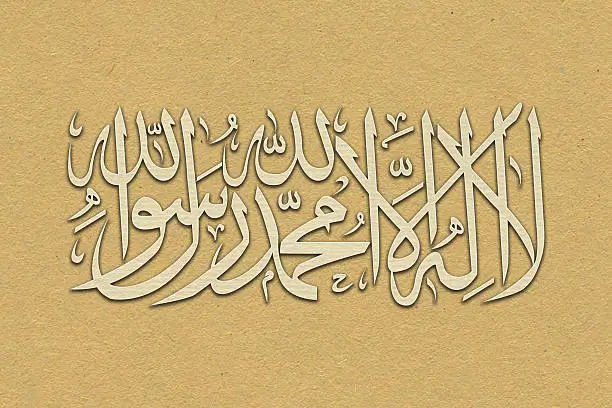
1. Kalma Tayyibah (Word of Purity)
Arabic: لَا إِلٰهَ إِلَّا اللّٰهُ مُحَمَّدٌ رَسُولُ اللّٰهِ
Transliteration: La ilaha illallah Muhammadur Rasoolullah
Translation: There is no god but Allah, Muhammad is the Messenger of Allah
Significance:
- Affirms Tawheed (Oneness of Allah)
- Establishes the foundation of faith
- Serves as the primary statement for new Muslims
2. Kalma Shahadat (Word of Testimony)
Arabic: أَشْهَدُ أَنْ لَا إِلٰهَ إِلَّا اللّٰهُ وَأَشْهَدُ أَنَّ مُحَمَّدًا عَبْدُهُ وَرَسُولُهُ
Transliteration: Ashhadu an la ilaha illallah wa ashhadu anna Muhammadan abduhu wa rasooluhu
Translation: I bear witness that there is no deity except Allah, and I bear witness that Muhammad is His servant and Messenger
Significance:
- Essential for affirming one’s faith
- Declares belief in Allah and His Prophet ﷺ
- Frequently recited in daily prayers and Islamic rituals
3. Kalma Tamjeed (Word of Glory)
Arabic: سُبْحَانَ اللّٰهِ وَالْحَمْدُ لِلّٰهِ وَلَا إِلٰهَ إِلَّا اللّٰهُ وَاللّٰهُ أَكْبَرُ وَلَا حَوْلَ وَلَا قُوَّةَ إِلَّا بِاللّٰهِ الْعَلِيِّ الْعَظِيمِ
Transliteration: Subhanallahi walhamdulillahi wa la ilaha illallahu wallahu akbar wa la hawla wa la quwwata illa billahil aliyyil azeem
Translation: Glory be to Allah, all praise be to Allah, there is no deity but Allah, Allah is the Greatest, and there is no power nor strength except with Allah, the Most High, the Most Great
Significance:
- Expresses glorification, praise, and reliance on Allah
- Enhances spiritual mindfulness and Dhikr
4. Kalma Tawheed (Word of Oneness)
Arabic: لَا إِلٰهَ إِلَّا اللّٰهُ وَحْدَهُ لَا شَرِيكَ لَهُ لَهُ الْمُلْكُ وَلَهُ الْحَمْدُ يُحْيِي وَيُمِيتُ وَهُوَ حَيٌّ لَا يَمُوتُ أَبَدًا أَبَدًا ذُو الْجَلَالِ وَالْإِكْرَامِ بِيَدِهِ الْخَيْرُ وَهُوَ عَلَى كُلِّ شَيْءٍ قَدِيرٌ
Transliteration: La ilaha illallahu wahdahu la sharika lahu, lahul mulku wa lahul hamdu, yuhyi wa yumitu wa huwa hayyun la yamutu abadan abada, dhul-jalali wal-ikram, biyadihil khayr, wahuwa ‘ala kulli shay’in qadeer
Translation: There is no deity except Allah alone, He has no partner. His is the dominion and His is the praise. He gives life and causes death, and He is Ever-Living and never dies, Possessor of majesty and honor. In His hand is all good, and He is capable of all things
Significance:
- Reinforces monotheism and reliance on Allah
- Encourages submission and recognition of Allah’s authority
5. Kalma Astaghfar (Word of Seeking Forgiveness)
Arabic: أَسْتَغْفِرُ اللّٰهَ رَبِّي مِنْ كُلِّ ذَنْبٍ وَأَتُوبُ إِلَيْهِ
Transliteration: Astaghfirullaha Rabbi min kulli dhanbin wa atubu ilayh
Translation: I seek forgiveness from Allah, my Lord, from every sin I committed and turn to Him in repentance
Significance:
- Helps purify the heart and soul
- Encourages daily repentance and humility
6. Kalma Radd-e-Kufr (Word of Rejecting Disbelief)
Arabic: اللّٰهُمَّ إِنِّي أَعُوذُ بِكَ مِنْ أَنْ أُشْرِكَ بِكَ شَيْئًا وَأَنَا أَعْلَمُ وَأَسْتَغْفِرُكَ لِمَا لَا أَعْلَمُ
Transliteration: Allahumma inni a’udhu bika min an ushrika bika shay’an wa ana a’lamu wa astaghfiruka lima la a’lamu
Translation: O Allah! I seek refuge in You from knowingly associating anything with You, and I seek Your forgiveness for what I do not know
Significance:
- Strengthens faith by rejecting disbelief and shirk
- Promotes awareness of intentional and unintentional sins
History and Origin of the Six Kalmas
- The Six Kalmas were compiled for educational purposes, primarily in South Asian madrasa traditions
- Each Kalma is rooted in the Qur’an and Hadith, though the formal grouping is pedagogical
- Teachers use them to facilitate memorization and understanding of Islamic beliefs
- LSI: origin of six kalimas, history of kalmas, kalma compilation
Importance and Benefits of Kalmas
Spiritual Significance
- Strengthen Iman (faith) and Tawheed)
- Encourage Dhikr (remembrance of Allah)
- Aid in daily worship and reflection
Educational Tool
- Simplifies teaching children and new Muslims
- Supports structured memorization and review
- Internal link suggestion: Qualities of a Good Quran Teacher
Daily Use
- Recite after Salah, before sleep, or during Dhikr
- Helps maintain consistent spiritual connection
- LSI: daily recitation, spiritual purification, memorization tool
How to Memorize and Teach Kalmas
- Use Arabic, transliteration, and translation together
- Recite repeatedly in short sessions
- Encourage children to understand meanings along with words
- Use audio aids, flashcards, and visual posters
At Quran Teacher Online, we provide personalized and engaging classes to teach your children the Six Kalmas and the Holy Quran with proper pronunciation, understanding, and memorization techniques. Our experienced teachers ensure a fun and interactive learning experience that strengthens your child’s faith and connection with Allah.
FAQs
- Are Kalmas found in the Qur’an? → Each Kalma is Qur’anic-based, but sixfold set is pedagogical
- Why are there six Kalmas? → Simplifies teaching and memorization
- Is Kalma same as Shahadah? → Kalmas include Shahadah but also other declarations
- Do all Muslims use the Six Kalmas? → Common in South Asia, not universal globally
- LSI: kalma faq, frequently asked questions, islamic declaration of faith
Conclusion
Kalmas in Islam are short, powerful declarations of faith, helping Muslims affirm belief, seek forgiveness, and glorify Allah. The Six Kalmas serve as a memorization and teaching tool, especially for children and new learners, and remain a valuable spiritual practice in daily life.