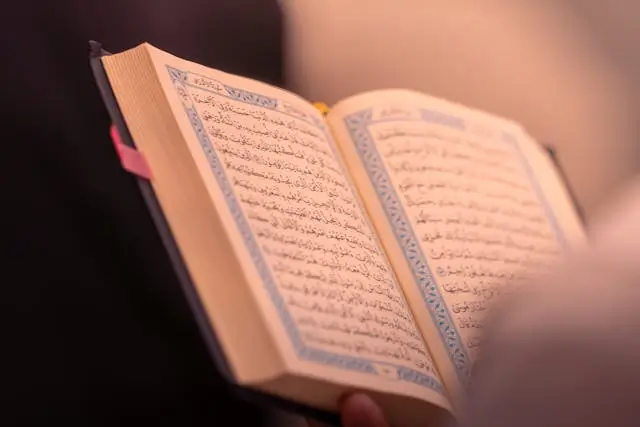
Can You Read Quran on Your Period? Understanding the Islamic Ruling
Many Muslim women ask an important and sincere question: can you read Quran on your period? This question often arises from a place of deep love and connection with the Book of Allah (SWT). For many, the Qur’an is not just a book to be read; it’s a source of peace, guidance, and spiritual comfort. Yet, during menstruation, some women hesitate — unsure whether they can recite or even touch the Qur’an.
In this article, we’ll explore what Islamic scholars and authentic sources say about reading the Qur’an during menstruation, how modern technology has affected this ruling, and how women can stay spiritually connected even while on their period.
The Concept of Purity (Taharah) in Islam
Islam places great importance on Taharah, or ritual purity. Certain acts of worship, such as Salah (prayer), Tawaf (circumambulating the Ka’bah), and touching the physical Mushaf (Qur’an copy), require a state of purity.
Menstruation, or Hayd, is a natural process created by Allah (SWT). It temporarily exempts women from specific acts of worship — not as punishment, but as mercy and ease. Allah says in the Qur’an:
“Allah intends for you ease and does not intend for you hardship.”
(Surah Al-Baqarah 2:185)
Understanding this principle helps us approach the question of reading Qur’an during menstruation with balance and compassion.
Can a Woman Read Qur’an During Her Period?
The Qur’an and Sunnah do not explicitly forbid a woman from reciting the Qur’an during menstruation. However, scholars have different opinions based on their interpretations of Islamic rulings regarding ritual purity.
The differences lie in whether a woman can touch the Mushaf, recite from memory, or read using a device such as a phone or tablet.

Scholarly Opinions Explained
a) The Majority View (Hanafi, Hanbali, and Shafi‘i Schools)
The majority of scholars hold that a woman should not touch or recite directly from the Mushaf during menstruation. This view is based on an interpretation of the verse:
“None touch it except the purified.”
(Surah Al-Waqi‘ah 56:79)
They argue that menstruation temporarily removes ritual purity, hence direct handling of the Qur’an should be avoided.
However, even within this group, many scholars permit reciting short portions for remembrance (dhikr) or teaching purposes if absolutely necessary.
b) The Maliki View
The Maliki school takes a more lenient approach. They allow women to recite the Qur’an verbally or silently during menstruation as long as they do not touch the physical Mushaf.
Their reasoning is that menstruation is not a sin, and reciting Allah’s words cannot be an act of impurity. In fact, it helps maintain spiritual closeness.
c) Contemporary and Modern Fatwas
In today’s age, many scholars and Islamic councils have re-evaluated this ruling considering digital advancements.
- British Fatwa Council, Darul Iftaa Jordan, and scholars from AboutIslam.net state that reading the Qur’an from a digital device or memory is permissible, as it does not involve physical contact with a Mushaf.
- Shaykh Faraz Rabbani explains that digital text is not the same as Mushaf script, and therefore, the restriction does not apply.
Hence, it is generally allowed for women to read or recite Qur’an on their phones, tablets, or laptops during menstruation.
Reading Qur’an on a Phone or Tablet
One of the most common questions today is:
“Can I read the Qur’an on my phone while on my period?”
The answer from many scholars is yes.
Digital screens display pixels, not ink — therefore, it’s not considered the same as touching a Mushaf. Women may also listen to recitations, follow along, or read translations and tafsir.
This practice allows Muslim women to remain spiritually active without breaking any Islamic guideline.
Related reading: Can You Read Quran Without Wudu?
Touching, Reading, and Reciting — The Differences
It’s crucial to distinguish between the three actions related to Qur’an engagement:
| Action | Permissible During Period? | Explanation |
|---|---|---|
| Touching the physical Mushaf | ❌ No | Requires wudu and ritual purity |
| Reading from memory | ✅ Yes | No physical contact |
| Reading on phone/tablet | ✅ Yes | Digital text, not Mushaf |
| Listening to Qur’an | ✅ Yes | Always allowed |
So while touching the Mushaf is restricted, reading digitally or reciting from memory is encouraged to maintain a connection with the Book of Allah.
Evidence from the Sunnah and Hadith
There is no direct hadith prohibiting women from reciting the Qur’an during menstruation.
The Prophet ﷺ said regarding menstruating women during Hajj:
“Do what the pilgrims do except do not perform Tawaf around the Ka‘bah until you are purified.”
(Sahih al-Bukhari 305)
This hadith shows that menstruating women can engage in dhikr, dua, and remembrance — only acts requiring purity (like Salah or Tawaf) are restricted.
Thus, reciting or reading the Qur’an for remembrance or study is not prohibited.
Staying Spiritually Connected During Menstruation
Menstruation is not a spiritual break — it’s an opportunity for reflection, dua, and learning.
Here are ways women can stay connected to the Qur’an and worship during this time:
- Listen to Qur’an recitations daily.
- Read translations and tafsir to deepen understanding.
- Memorize new surahs or review old ones from memory.
- Recite duas and adhkar, such as Ayatul Kursi and Dua Qunoot.
- Teach children or family about Qur’anic stories.
You can explore related blogs for more guidance:
Common Misconceptions About Menstruation and Worship
Many people mistakenly believe that menstruating women are “impure” or “forbidden” from engaging in worship. Islam, however, teaches that a woman’s worth and purity are not diminished by her natural biological cycle.
Menstruation is part of Allah’s wisdom. It is a time for rest, reflection, and mercy, not exclusion. Even when unable to perform certain acts, women can still engage in dhikr, dua, and learning — which are equally valuable forms of worship.
Practical Steps for Women During Their Period
Here are practical steps every Muslim woman can take to maintain her spiritual routine:
- 💠 Read Qur’an translations and tafsir.
- 💠 Use Qur’an apps to continue your recitation schedule.
- 💠 Listen to favorite surahs for spiritual comfort.
- 💠 Join online Islamic classes focused on reflection or tafsir.
- 💠 Write down reflections or duas in a journal.
Internal link suggestion: Islamic Studies for Kids — a great resource for mothers to stay engaged with their children in Islamic learning.
Summary of Scholarly Rulings
| School of Thought | Ruling on Recitation | Notes |
|---|---|---|
| Hanafi | Avoid full recitation from Mushaf | Allowed for dhikr/teaching |
| Shafi‘i | Not allowed to touch or recite | Exception for partial recitation |
| Hanbali | Avoid reciting directly | Recitation from memory debated |
| Maliki | Allowed to recite, avoid touching Mushaf | Widely accepted in modern times |
| Contemporary Scholars | Allowed on digital devices | Common modern fatwa |
Conclusion: The Qur’an Welcomes Every Believer
To summarize — Menstruation is a temporary state, not a spiritual barrier. While scholars differ on touching or reading the physical Mushaf, reciting from memory and reading through digital devices are widely accepted as permissible.
A woman’s connection to Allah (SWT) and His Book never stops. What matters most is her intention, love, and remembrance of Allah — for the Qur’an is a book of mercy, not restriction.
“Indeed, in the remembrance of Allah do hearts find rest.”
(Surah Ar-Ra’d 13:28)