Education in Islam for Women: A Divine Right and Sacred Responsibility
Islam places extraordinary value on knowledge, wisdom, and lifelong learning. This emphasis applies equally to men and women—without exception. From the Qur’an to the Sunnah, from the lives of the Sahabiyat (female companions) to Islamic civilization throughout history, the right to education stands as one of the clearest and most honored teachings of Islam.
In a world where misconceptions persist, it becomes essential to re-examine what Islam truly says about women’s education. This article explores the Qur’anic foundation, prophetic teachings, historical contributions, and the role of Muslim women as educators, learners, scholars, and guides for the next generation.
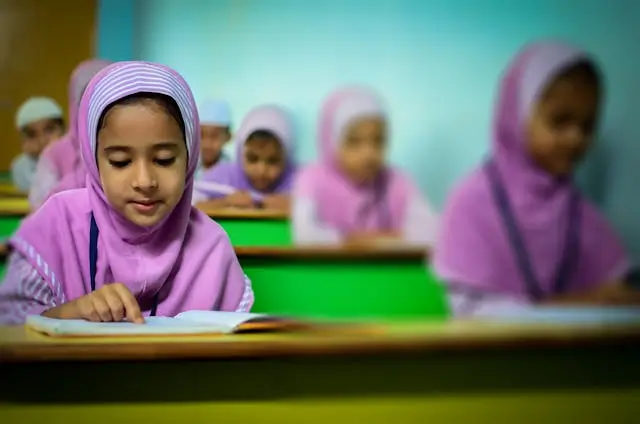
What Does Islam Say About Women’s Education?
Education is not merely recommended in Islam—it is obligatory. The Prophet Muhammad ﷺ stated:
“Seeking knowledge is an obligation upon every Muslim.”
(Sunan Ibn Majah)
The word “Muslim” here includes both men and women. Classical scholars unanimously confirm this interpretation.
Quranic Evidence Supporting Education for Women
The Qur’an repeatedly emphasizes reflection, reasoning, and learning. Key verses demonstrating this include:
- “Are those who know equal to those who do not know?” (39:9)
- “Read in the name of your Lord who created.” (96:1)
- “Allah will raise those who believe and those who have been given knowledge in rank.” (58:11)
None of these verses limit the command to men; they address all believers.
Prophetic Teachings on Educating Women
The Prophet ﷺ dedicated special sessions to teach women. He encouraged them to ask questions, seek clarity, and learn the religion in depth.
A hadith states:
“The women have overcome the men in modesty and asking questions.”
(Bukhari)
This shows that women actively sought knowledge—and the Prophet ﷺ welcomed their eagerness.
The Role of Women as Scholars in Islamic History
Islamic history is filled with women who excelled as scholars, teachers, and intellectual leaders.
Aisha (RA) – A Scholar for the Entire Ummah
Aisha (RA) narrated more than 2,000 ahadith and was known for her:
- deep knowledge of fiqh
- mastery of Qur’anic interpretation
- understanding of medicine and poetry
- guidance to senior companions
She taught men and women alike, becoming one of the greatest scholars in Islamic history.
Fatima al-Fihri – Founder of the World’s First University
Fatima al-Fihri founded the University of Al-Qarawiyyin in 859 CE in Morocco — recognized by UNESCO as the oldest existing university in the world.
This monumental achievement by a Muslim woman highlights Islam’s support for women’s advancement.
Other Notable Female Scholars
- Umm Salama (RA) – expert in fiqh and hadith
- Hafsa bint Umar (RA) – guardian of the written Qur’an manuscript
- Zaynab bint Kamal – issued scholarly ijazahs
- Shuhda al-Baghdadiyya – known as “the scholar of Baghdad”
Their contributions invalidate stereotypes that Islam discourages female education.
Why Education for Women Is Essential in Islam
1. Educated Women Strengthen the Ummah
A knowledgeable woman raises knowledgeable children, contributes to her family’s wellbeing, and strengthens the moral fabric of society.
2. Mothers Are the First Teachers
Islam honors mothers with unmatched respect. Since mothers shape the early learning of children, educating women is key to forming a strong future generation.
3. Women as Educators and Community Leaders
Women taught in mosques, libraries, and educational institutions throughout Islamic history. Many issued scholarly certifications to male students.
4. Education Helps Women Understand Their Rights
Misinterpretations often arise due to lack of knowledge. Women empowered with Islamic education can:
- understand their rights
- recognize their responsibilities
- avoid cultural practices disguised as “religion”
5. Education Helps Women Contribute in All Fields
Islam encourages contributions in fields such as:
- healthcare
- teaching
- business
- Islamic scholarship
- community development
Examples include Rufaidah al-Aslamiyyah (Islam’s first nurse) and Nusaybah bint Ka’b (a courageous protector of the Prophet ﷺ).
Islam vs. Cultural Misconceptions
Many restrictions imposed on women today come from culture—not Islam.
Islam clearly encourages learning, while certain cultures may restrict opportunities due to:
- tribal traditions
- lack of resources
- social pressure
- misunderstandings of religious texts
Islam Liberated Women Through Knowledge
When the Qur’an was revealed, women in many societies were denied education. Islam eradicated these injustices and restored dignity and equality.
Modern Importance of Women’s Education in Islam
1. Preserving Islamic Values
Educated Muslim women can pass Islamic teachings to the next generation with clarity and authenticity.
2. Navigating the Digital World
Knowledge empowers women to navigate modern challenges such as:
- online misinformation
- identity issues
- societal pressure
3. Strengthening Muslim Families
An educated wife, mother, or daughter contributes to a harmonious and spiritually enriched home.
Online Quran Learning for Women – A Modern Islamic Opportunity
Today, Muslim women can easily access quality Islamic education online through trusted platforms.
Here’s what our academy offers:
- one-on-one female teachers
- flexible schedules for mothers and students
- beginner to advanced Quran courses
- Tajweed classes designed for women and children
Conclusion
Islam has always emphasized the importance of women’s education, making it a clear Quranic command, a prophetic tradition, a proven historical reality, and a vital modern necessity. When Muslim women are empowered with knowledge, the benefits extend beyond the individual: families flourish, communities grow stronger, and Islamic values continue to thrive. Truly, in Islam, educating a woman is not just empowering her—it is educating an entire generation and shaping the future of the Ummah.